Combat in A Long Flight is first a survival problem. An enemy aircraft can pursue and fire on you even when your own plane has no weapon, while rockets can threaten the engine or wings. The safest response is to preserve control, create a chance to disengage, and land before damage or a second hazard removes that option.
What combat can involve
The available evidence documents several combat-related entities, but not a complete weapon system. Use the table to distinguish what you may encounter from what remains unknown.
Combat encounters and responses
| Encounter or item | What it does | Practical response |
|---|---|---|
| Hostile Aircraft | Pursues the player and fires | Accelerate, turn, or plan a landing |
| Machine Gun | Enemy fire that can damage or bring down a plane | Break the chase and reach a landing area |
| Weapon Mode | Reported mode for some aircraft | Use only if the aircraft exposes the mode |
| Rocket | Projectile that may hit an engine or wing | Avoid its path and keep an emergency landing option |
| RPG-related item | Rocket launcher or ammunition seen in sandbox footage | Treat pickup and loading steps as unconfirmed |
This table describes practical encounter choices, not a complete loadout list. No supplied source establishes damage values, ammunition counts, aircraft health, enemy spawn rules, or a reward for winning a fight.
How to survive an enemy-aircraft chase
Use this order when another plane starts following or firing at you:
- Keep the plane flyable. Do not make a sudden low turn toward buildings, mountains, or other terrain just to lose the pursuer. A controlled aircraft gives you more than one recovery option.
- Change the chase line. Accelerate when possible and alter your direction so the enemy cannot stay on the same approach. The evidence supports acceleration and turning as defensive choices, not as guaranteed evasion mechanics.
- Pick the landing option early. A recording describes the player being shot at and attempting to land. Choose an airport or another visible, usable landing area before repeated fire or a separate failure leaves you with no control.
- Land for survival, not style. A hard landing can still be preferable to staying in a damaged aircraft under fire. Reduce the approach risk and keep enough room to correct the plane.
- Reassess before taking off again. Check the aircraft and its controls after the encounter. Do not assume that surviving the landing means the plane is undamaged or that the enemy encounter has ended.
The key decision is whether the aircraft can still reach a safe landing. If it can, disengagement is usually more reliable than searching for an undocumented counterattack. If it cannot, prioritize keeping the plane level and finding the broadest available surface rather than forcing a precise runway approach.
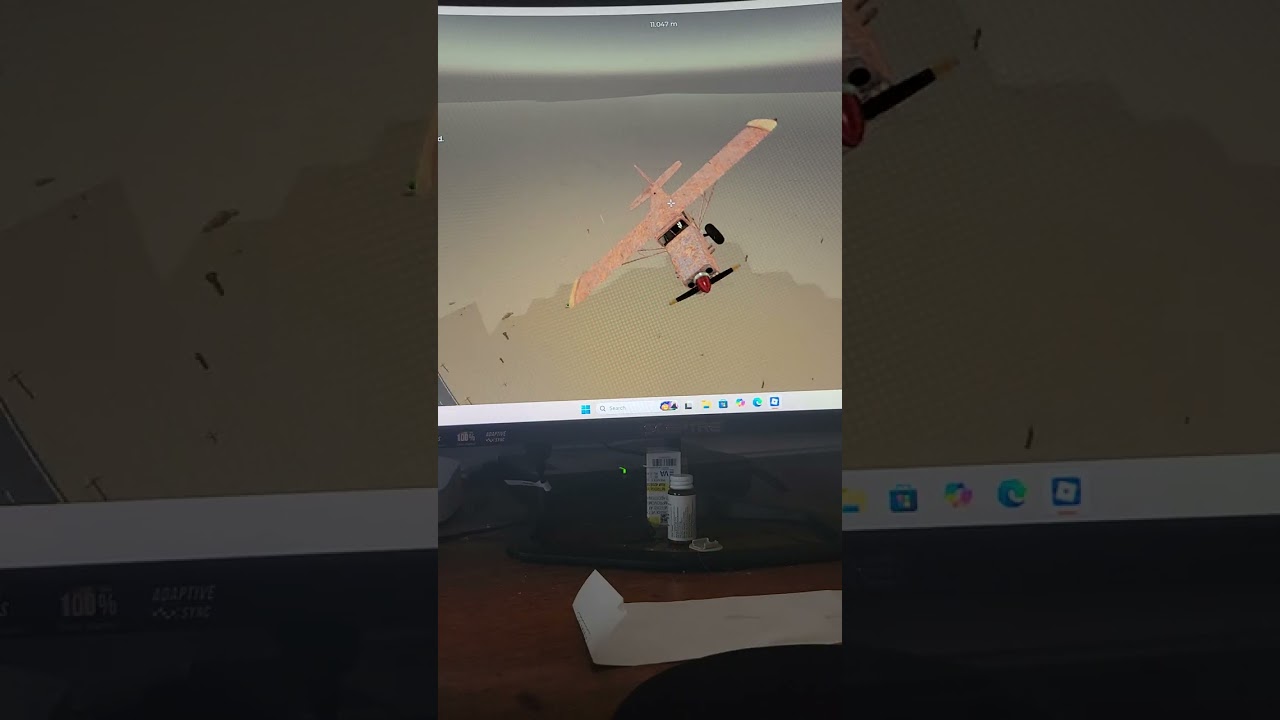
Survive an enemy-aircraft chase
This moment supports the defensive chase guidance by showing an unarmed plane being shot at while the player attempts to land.
Handling rockets
Rocket footage shows two separate uncertainties: the projectile may be picked up and loaded into a launcher, and the subtitles disagree about whether the launcher or item is called RPG-6 or RPG-26. The evidence does not confirm a universal keybind, an inventory recipe, or a named model that every player can use.
When a rocket is coming toward the aircraft:
- Keep watching the projectile instead of committing to a straight, predictable flight path.
- Avoid making a sharp correction that sends the plane into terrain or stalls it.
- Treat an engine or wing hit as a possible severe-damage event; the recording evidence does not provide a repair threshold or guaranteed recovery method.
- Start looking for a landing area immediately if the aircraft loses power, stability, or a major part.
If you are experimenting with rockets in a sandbox setting, confirm the item name and loading interaction in the current session. The supplied sources do not establish that a spawned RPG item, rocket ammunition, and a Weapon Mode aircraft are interchangeable.
When Weapon Mode is available
One recording says that some planes have weapons and a Weapon Mode for shooting from a distance. That is enough to treat Weapon Mode as a possible aircraft capability, not enough to publish a supported-aircraft list or control scheme.
Check Weapon Mode before attacking from a distance
This moment supports the Weapon Mode guidance by describing aircraft weapons and shooting from a distance without confirming a universal aircraft list or control scheme.

Before relying on it, verify all three of these in your current plane:
- The aircraft actually exposes a weapon or Weapon Mode option.
- The mode responds to an available control or interaction prompt.
- The weapon can be used without compromising your ability to fly and land.
If any of those checks fails, return to the defensive plan. Do not choose a plane solely because a recording showed a different aircraft firing; the evidence does not identify the model or prove that the behavior is universal.
Combat mistakes and recovery
Staying in the open too long: If the enemy is already firing, continuing the route without a landing plan increases the number of things that can go wrong. Divert early.
Assuming no weapon means no combat: The recorded encounter with an unarmed player shows that enemy contact can still happen. Prepare a defensive route before takeoff.
Confusing a hard landing with a safe reset: A rough landing may preserve the run, but it does not verify that the plane, engine, or wings are intact. Inspect before launching again.
Treating the rocket name as settled: RPG-6 and RPG-26 appear as conflicting subtitle transcriptions. Use the current in-game item or prompt as the deciding label.
Fighting while weather is already dangerous: Lightning and other weather events can create separate aircraft problems. If an enemy chase overlaps with a power or visibility issue, landing and stabilizing should take priority over testing a weapon.
Combat questions
Where do hostile aircraft spawn?
The supplied evidence confirms encounters during flight but does not document fixed spawn locations, enemy types, or a reliable trigger distance.
How much damage does a machine gun or rocket deal?
No supported damage numbers, health values, or hit thresholds are available. The evidence only supports the practical conclusion that enemy fire can threaten the aircraft and that a rocket may cause serious engine or wing damage.
Do kills give money, tokens, or progression?
No combat reward, independent combat level, or confirmed progression system is documented in the supplied evidence.